Sunday, July 19, 2020

‘Barn Finds’, Mosquito, P-51 & Others, The Aviation Equivalent of Aladdin’s Cave
‘Barn Finds’, Mosquito, P-51 & Others, The Aviation Equivalent of Aladdin’s Cave

 
Credit: Graham Orphan

OMAKA AVIATION HERITAGE CENTRE WELCOMES RARE WARBIRDS
The John Smith Collection, the aviation equivalent of Aladdin’s Cave.

We are excited and honoured to announce that the family of deceased aviation collector, John Smith have appointed the Omaka Aviation Heritage Centre (OAHC) to work with them as guardians of his remarkable collection, to preserve and publicly display these hero aircraft to New Zealand and the world.

The John Smith collection had its beginnings in the 1950’s when as a young man he witnessed wholesale scrapping of warbirds around the world and even in his own backyard.
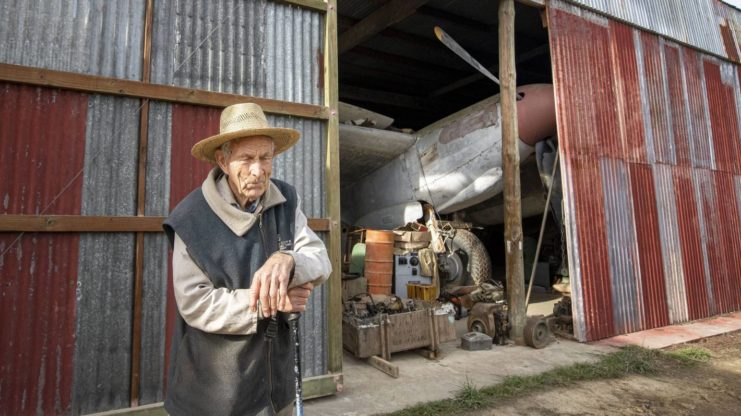
“We estimated it would take about three years to tidy everything up and clear it out, and that still could be the case.”.Credit: LUZ ZUNIGA/STUFF

John lived in Mapua and was aware that over the hill in Marlborough, historic warplanes such as Mustangs, Mosquitos and Hudsons were being broken up.

He managed to save several key aircraft and stored them in a shed on his Mapua property, where they remained as untouched, and for the most part unseen, records of NZ aviation history.

Over the decades, word of the Kiwi recluse with his rare warbird collection reached around the world. Collectors travelled from across the planet to try to purchase his aeroplanes but left empty handed.
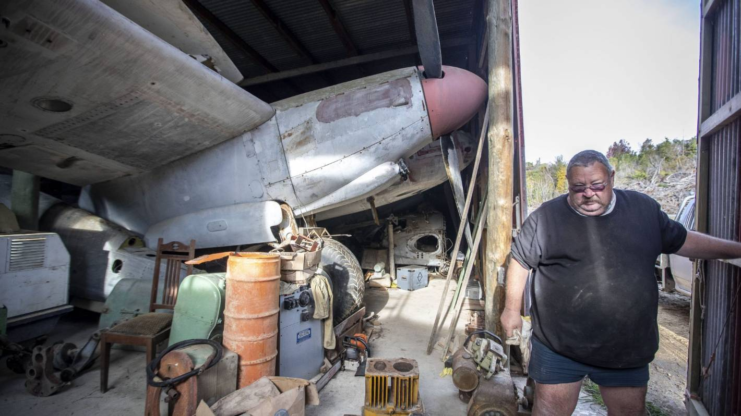
Credit: Graham Orphan

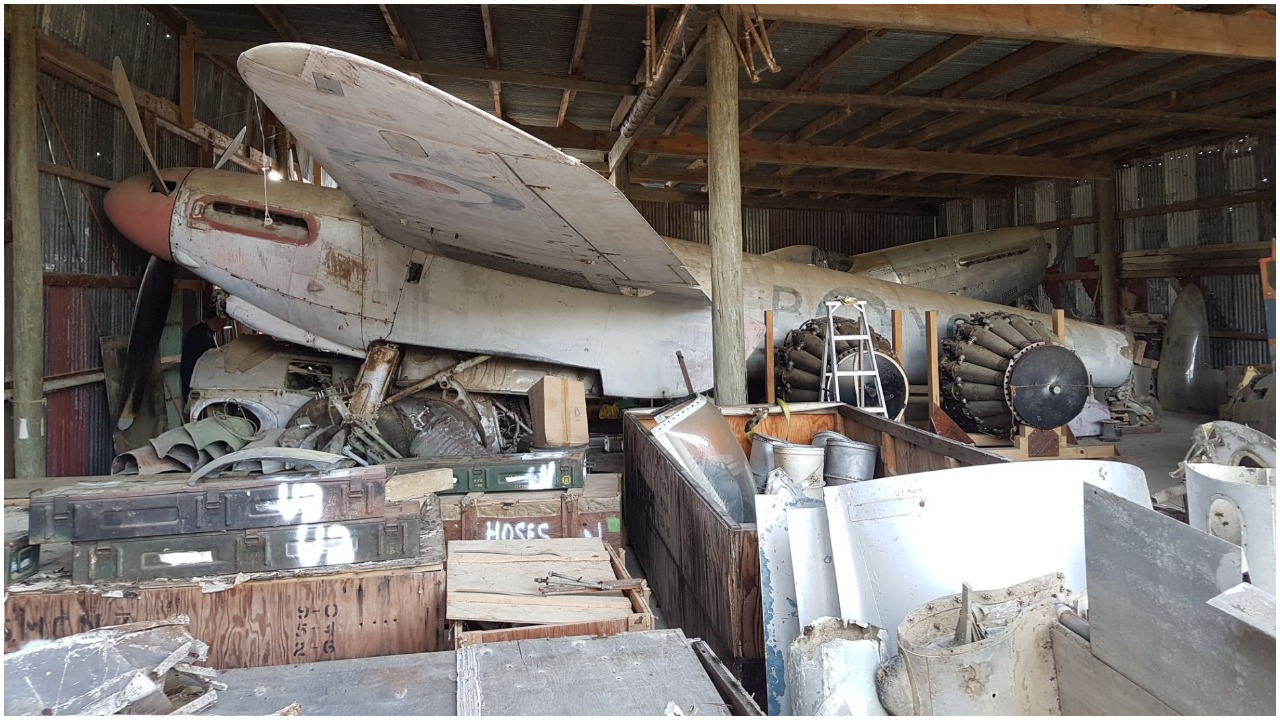
John’s shed was the aviation equivalent of Aladdin’s Cave, fuselages lined up parallel to one another like sardines, symmetrically arranged either side of a fully assembled Mosquito.

“Many of us have seen restored combat aircraft from WW2, albeit in small numbers, however these aircraft were the ‘real deal’, carrying the original paint they wore when parked under the palm trees on some Pacific atoll, being rearmed before going back to battle”, says OAHC board member Graham Orphan.
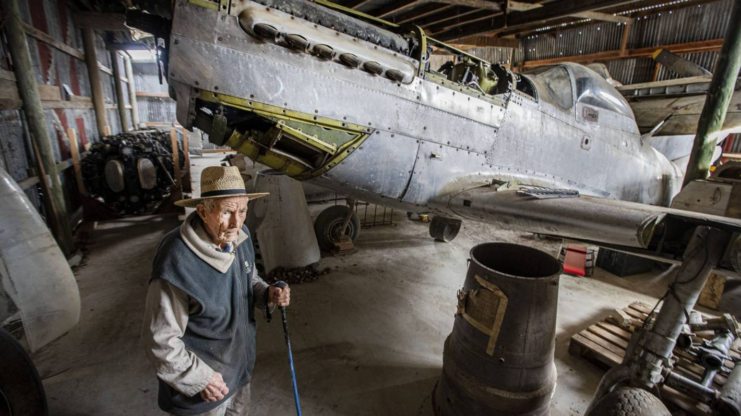
George Smith, 88, with the P-51 from his brother’s collection. It is hoped it can be restored to fly again. Credit: LUZ ZUNIGA/STUFF

The Smith aircraft destined for display at OAHC include a complete de Havilland Mosquito, John’s own original Tiger Moth and New Zealand’s most famous P-40, ‘Gloria Lyons’.

They will join the Lockheed Hudson, formerly gifted by John to Bill Reid, also on display at Omaka.

Conservation work has commenced on the P-40 and the next milestone is the disassembling of the Mosquito and transporting it from Mapua to Omaka.
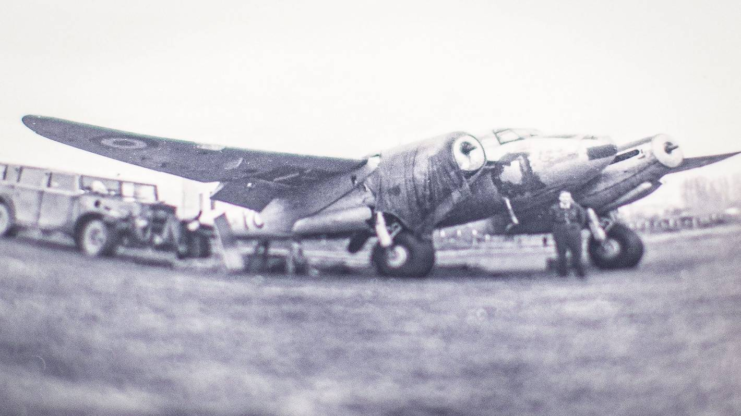
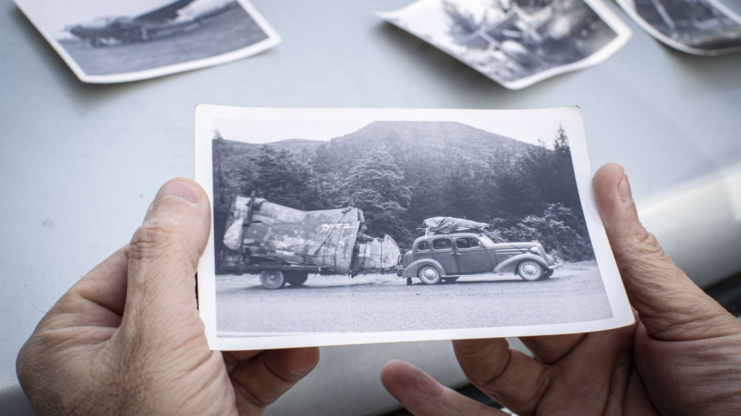
The Mosquito in the 1950s. Credit: SMITH FAMILY
SMITH FAMILY
SMITH FAMILY

Given the fragility and historical significance of the fuselage it requires specialised expertise and transportation. Future fundraising efforts including any profits from the Yealands Classic Fighters Air Show will be funnelled into this significant project and any donations or offers of sponsorship in kind will be gratefully accepted.

About Omaka Aviation Heritage Centre
Established to provide a world-class destination for the appreciation of historic aircraft, the Omaka AHC opened in 2006 with the Knights of the Sky exhibition, featuring Sir Peter Jackson’s extensive Great War collection of aircraft and rare memorabilia.

The calibre of the displays, enhanced by Weta Workshop’s mannequins and sets produced by WingNut Films, launched the Centre to international acclaim. Dangerous Skies, the WWII exhibition opened in 2016 and explores the stories of both male and female aviators.

Another Article From Us: Hero Pilot’s Book Enthralled the Country But Died Without Anyone his Knowing His Real Name

Iconic warbirds are on display including a flyable Spitfire Mk.14 and the Battle for Stalingrad comes to life in an experience which is equally informative, entertaining and heartbreaking.

To learn more visit www.omaka.org.nz or call us at +64 3 579 1305

Image: The late John Smith’s Shed, an aviators’ treasure trove including a fully assembled Mosquito.
Photographer: Graham Orphan

Kind regards,

Rachael Brown
Marketing Manager

Omaka Aviation Heritage Centre
+64 3 579 1305
marketing@omaka.org.nz


Monday, July 15, 2019

Messerschmidt's Wartime Aircraft


5 Messerschmitt Fighter Planes of WWII

  • INSTANT ARTICLES
  • MILITARY VEHICLES
  • WORLD WAR II
 Andrew Knighton


SHARE:FacebookTwitter
During the 1930s and 1940s, Messerschmitt made some of the most advanced and effective fighter planes in German service. They played an important part in the Second World War and in advancing technology in aerial warfare.

Bf109

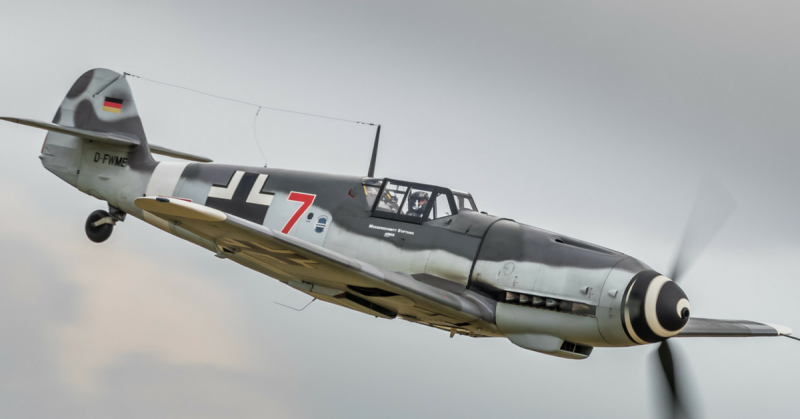
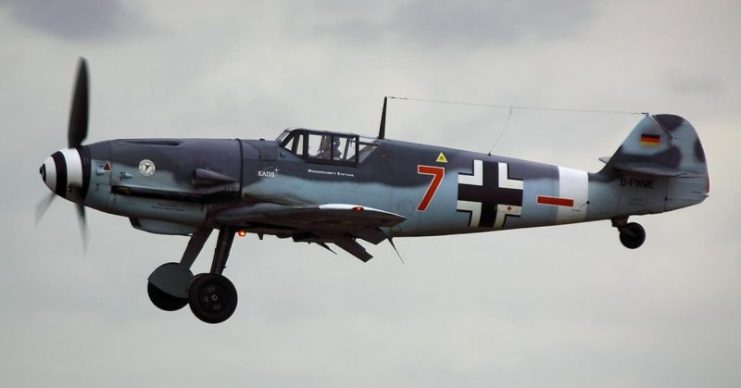
The most famous German plane of the war, the Bf109, was created using features from a civilian plane, the Bf108. What had previously been used to power a four-seater touring plane now powered a one-seater fighter.
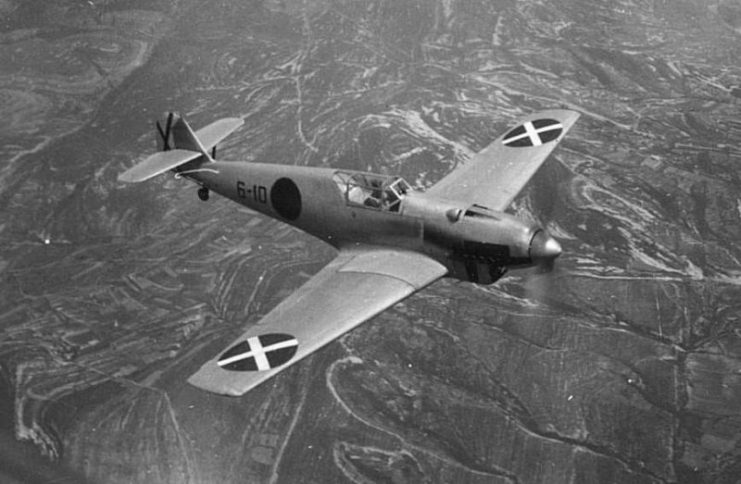
Upon entering service in 1937, the Bf109 soon proved its value. That November, one broke the world speed record for landplanes by flying at 379.38 mph. Bf109s went into action with the Condor Legion, German forces fighting in the Spanish Civil War. This provided pilots and engineers with more experience in operating the plane.


Bf 109A from the Condor Legion during Spanish Civil War (1936-1939)

Bf109s were widely used in the early stages of WWII, including the invasions of Poland and France and the Battle of Britain. The model E had a superior engine and weapons to the British planes it initially faced, which gave German pilots an edge in the air and made it infamous among its opponents.


BF109 – RIAT 2010.Photo Tim Felce (Airwolfhound) CC BY-SA 2.0

Various models of Bf109 were deployed to fill different roles and counter advances in Allied aircraft. It remained in production after the end of the war thanks to the Czech firm Avia, whose factory survived the war. By the time production ended in the mid-1950s, over 35,000 Bf109s had taken to the skies.


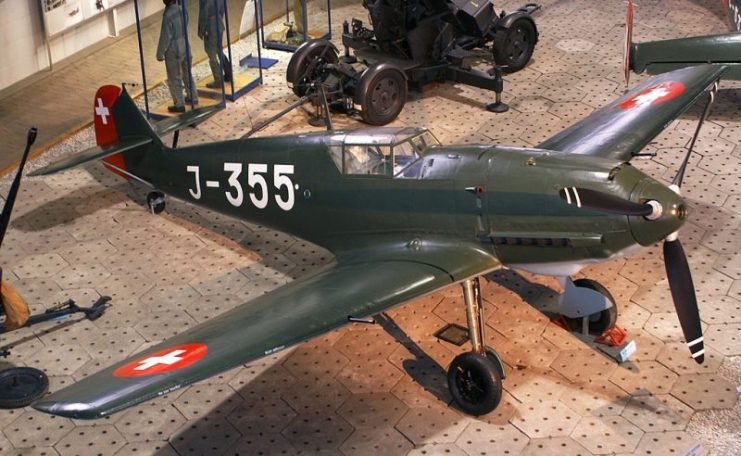
A Bf 109E-3 of the Swiss Air Force at the Flieger-Flab-Museum

Bf110

Designed around the same time as the Bf109, the Bf110 was a very different beast. Instead of being a dedicated interceptor, it was a combination of heavy fighter and light high-speed bomber. Its range and firepower would allow it to protect heavier bombers during runs into enemy airspace.


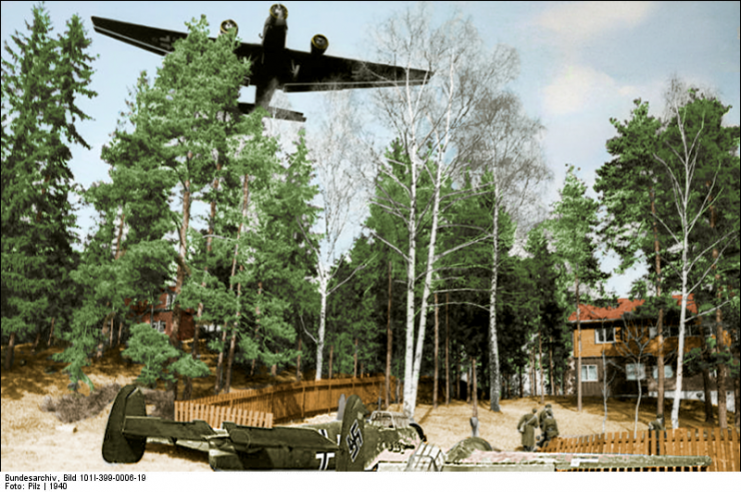
Messerschmitt Bf 110 of future night fighter ace Lt. Helmut Lent overshoot the runway in Oslo-Fornebu and came to rest in the garden of a house. A Junkers Ju 52/3m plane flies over the location. The photo has been taken by war reporters of the 5th Luftwaffe in Oslo1940.Photo: Pilz CC BY-SA 4.0

The Bf110 first went into combat during the invasion of Poland in September 1939. In December, Bf110s saw their first use in counter-bomber combat, shooting down 9 out of a flight of 22 RAF Wellingtons.


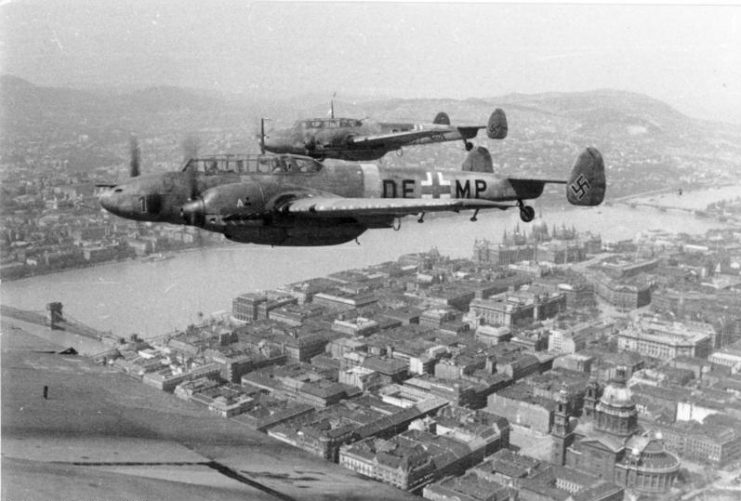
Bf 110s in flight above Budapest. 1944. Photo: Bundesarchiv, Bild 101I-669-7340-27 / Blaschka / CC-BY-SA 3.0

Following its early success, production increased, and 100 Bf110s per month were built in 1940. But the plane had a big problem: its lack of maneuverability made it vulnerable to advanced Allied fighters like the Spitfire and Hurricane.
Due to mounting losses, it was largely withdrawn from daytime service to become a night fighter. Once airborne radar was added, it became a deadly defender of Germany against nighttime raids. Its heavy weapons took down hundreds of Allied bombers. One pilot alone, Major Heinz-Wolfgang Schnaufer, claimed to have achieved 121 kills while flying a Bf110.


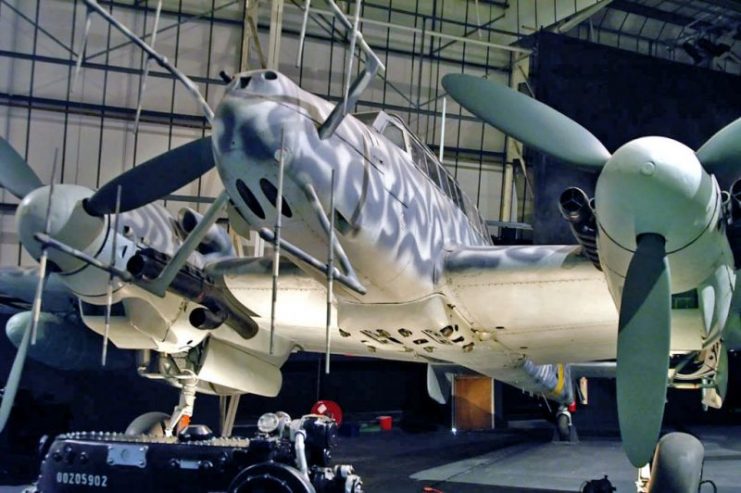
A Bf 110 G-4 night fighter at the RAF Museum in London.

Me410

The achievements of the Bf110 led to the development of a successor, which started out as the Me210. Despite test flights in which it stalled and proved unstable, the Me210 was put into production–only for this to be halted after 200 were built and more Bf110s being made instead.
Rather than abandon the plane, Messerschmitt engineers redesigned it. Renamed the Me410, the new version had a longer fuselage, automatic slats to stop it from stalling, and a more powerful engine.


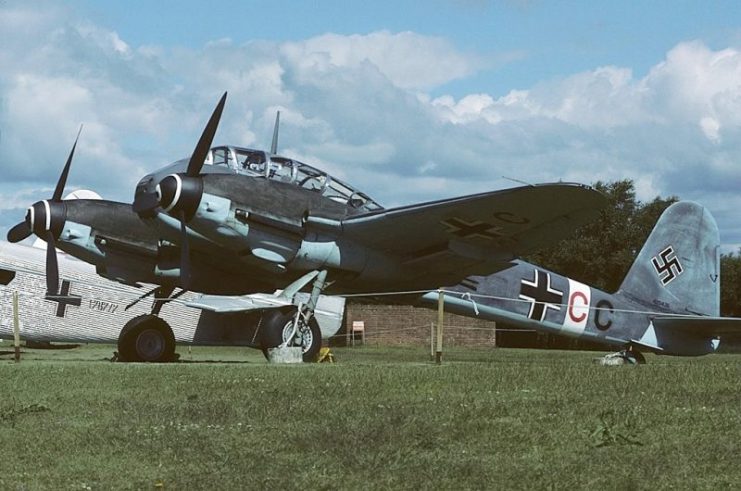
Messerschmitt Me-410A-1-U2 Hornisse, Germany – Air Force AN1139884.Photo Mike Freer GFDL 1.2

Like the Bf110, the Me410 could be used as a light bomber or heavy fighter. Entering service in January 1943, it was first used in nighttime bombing raids against Great Britain, and then to take out Allied bombers in the Mediterranean.
From early 1944 it was used to defend Germany against nighttime Allied bomber raids. It was also deployed as a night fighter against the Russians, who were now taking the offensive in the east.


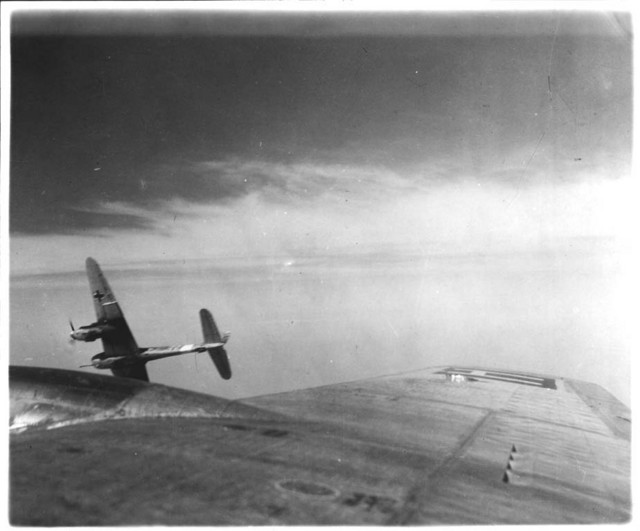
A Messerschmitt Me 410 with a BK 5 heavy autocannon peels off from attacking a 388th Bomb Group B-17 over Europe during the USAAF campaign against Germany, 1943

The heaviest weapon carried by an Me410 was the 50mm gun mounted beneath the fuselage of the Me104A-1/U4 model. This was devastating against enemy bombers but also nerve-wracking for the crew using it, thanks to its powerful recoil.
The Me410 was no better than the Bf110 it was meant to replace. Though over a thousand were made, production stopped in September 1944.

Me163


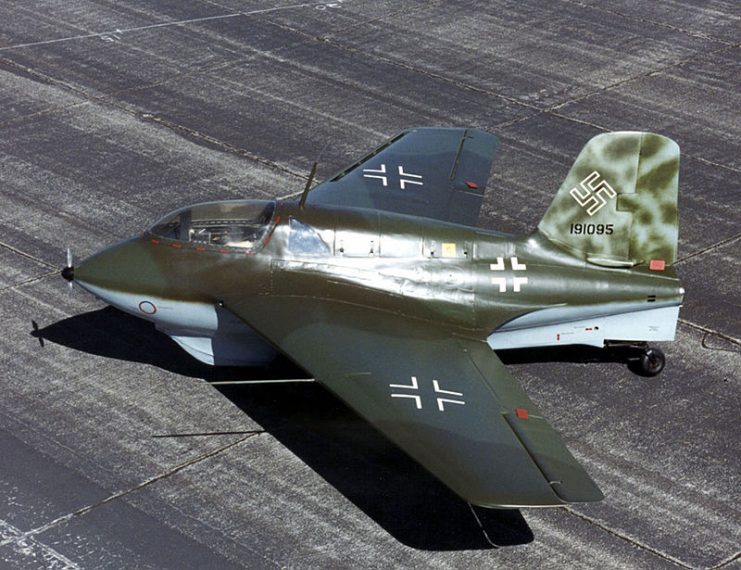
A German Messerschmitt Me 163B Komet rocket-propelled fighter (s/n 191095) at the National Museum of the United States Air Force, Dayton, Ohio (USA).

A high-performance rocket-powered plane, the Me163 was a truly radical design. Aside from its powerful high-tech engines, it had an unusual body shape and was one of the first planes to have swept wings. It was sometimes equipped with powerful experimental weapons, such as the SG 500 Jagdfaust, a set of vertical firing tubes triggered by the shadow of a bomber passing over the plane.
When it entered service in July 1944, the Me163 was twice as fast as anything the Allies could field against it. Small and agile, it was terrifying to face. Such high speeds initially proved problematic, as pilots had little time to fire before passing their targets. Swooping attacks from above proved to be the most effective tactic.


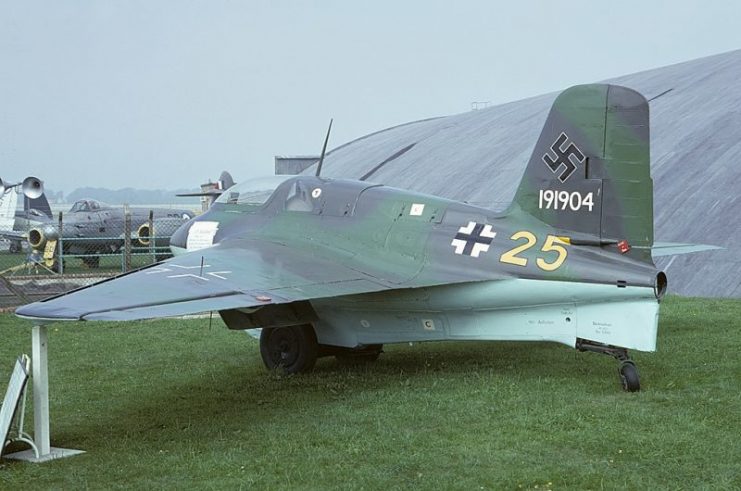
Messerschmitt Me-163B-1a Komet, Germany – Air Force AN1362828.Photo Mike Freer GFDL 1.2

Though its rocket made the Me163 deadly in combat, it could not be fired for long. The volatile fuel ran out after only seven and a half minutes of powered flight, after which the plane glided defenseless back to the ground. It was therefore only effective in a short-range air defense role.

Me262


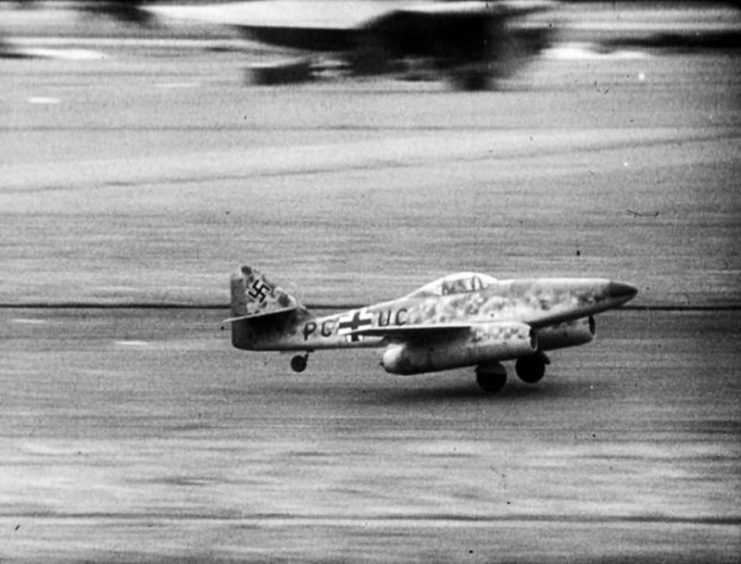
Me 262 Prototype in 1943.

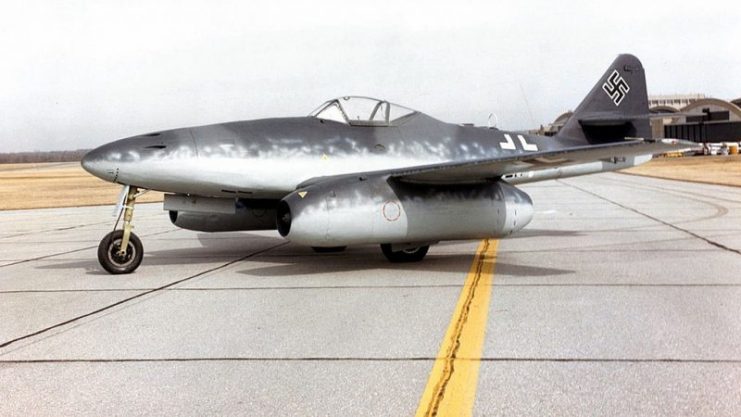
Though the Me163 was interesting, the Me262 was Messerschmitt’s truly groundbreaking plane – the first ever operational jet aircraft.
The Me262’s development was delayed first by the German Command’s focus on proven technology, and then by the intervention of the Allies, who bombed the factories producing it in August 1943. Problems with the performance and reliability of the engines slowed down production, so it was over two years from the first test flight before the plane entered service in July 1944.


Messerschmitt Me 262A at the National Museum of the United States Air Force.

Equipped with 24 rockets and four 30mm cannons, the Me262 was deadly against enemy bombers, but its impact was limited by the difficulties of getting enough of them into the air. Though over 1,400 were made, fewer than 300 went into action. Lack of fuel, spare parts, and trained pilots kept some on the ground. Others were destroyed by Allied bombers before they could take flight.


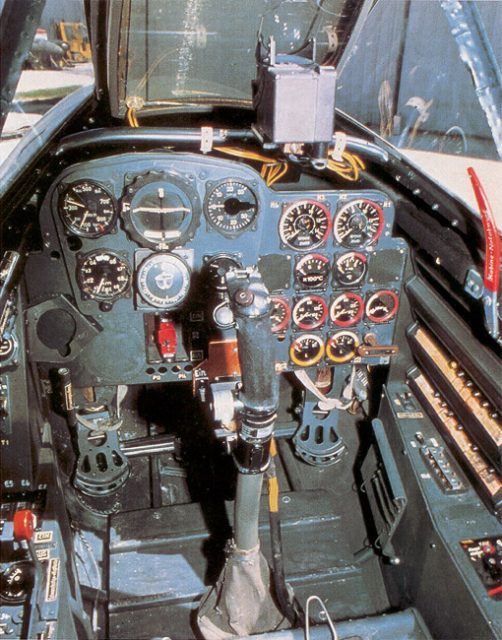
Me 262 cockpit

The Me 262 had a limited impact on the Second World War, but a huge effect on the development of military technology. It inspired designers across the world, shaping the design of jet fighters as they became the dominant force in aerial warfare.